
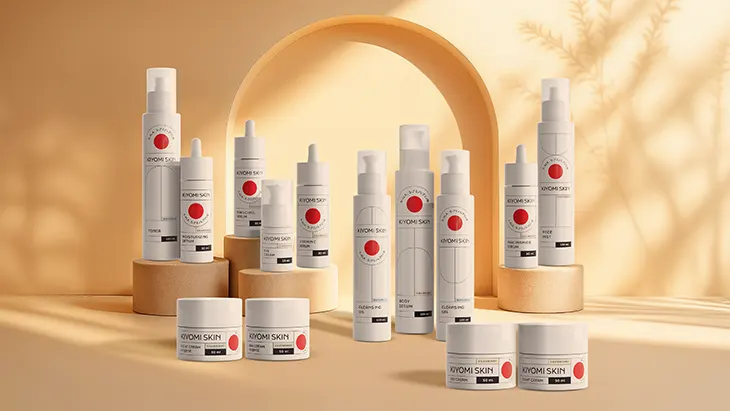
Kiyomi Skin enters the beauty conversation at a moment when skincare feels ready for a reset. After years of multi-step routines and trend-driven product layering, the brand looks to J-Beauty for a slower, more focused approach rooted in science, simplicity, and long-term skin support. In an interview with BEAUTY SCENE, Kiyomi Skin CEO Daniel Struve discusses how the brand moves away from excess and toward formulas that work with the skin’s natural function.
SKINCARE
At the center of the brand is 5-ALA, an amino acid researched in Japan and positioned by Kiyomi Skin as a foundation for skin energy, regeneration, and visible vitality. Struve describes the brand as research-driven and ingredient-led, with formulas shaped by purity, texture, and daily use. In the conversation, he speaks about the shift from K-beauty’s high-impact routines to J-Beauty’s more intentional philosophy, the science behind 5-ALA, the meaning of “clean” skincare, and why well-aging may define the next chapter of beauty.


K-beauty has shaped global skincare through multi-step routines, while Kiyomi Skin focuses on fewer, more targeted products. Do you think we’ve reached a point of global exhaustion with over-complicated routines, and is J-Beauty the antidote?
K-Beauty is and was a great trend that shaped the industry enormously, pushed by social media. It is loud, colourful and noisy, and those many-step routines with their direct, visible results are undeniably Instagrammable.
Ten-step routines were fascinating for a while, and K-beauty deserves real credit for pushing the industry to take skincare more seriously as a ritual. But I’ve spoken to so many customers who told me they had been using eight or nine products every morning and didn’t actually know what any of them were doing. That isn’t self-care. For many people, it quietly became a source of stress, and stress is one of the worst things for your skin.
J-Beauty has always operated from a different premise: less, but better. The philosophy is to understand what your skin actually needs and give it exactly that, nothing more. I think that resonates deeply right now, especially as consumers become more ingredient-literate and start asking harder questions. Some are much better informed thanks to AI, which offers great explanations about ingredients and formulations. It isn’t always perfectly accurate, but it gives consumers a strong starting point. And with everyone talking about longevity right now, the connection to Japanese skincare culture and philosophy feels more relevant than ever. That cultural backdrop could give J-beauty a meaningful push.
For us at Kiyomi Skin, this wasn’t just a positioning choice. It was a scientific one. When you work with an ingredient like 5-ALA that supports the skin at the cellular level, you’re not layering fixes on top of each other. You’re giving the skin what it needs to look and feel is best from the inside out. That naturally leads to a more focused, streamlined approach. So yes, I do think J-Beauty’s moment is here, and I think the best is still to come.

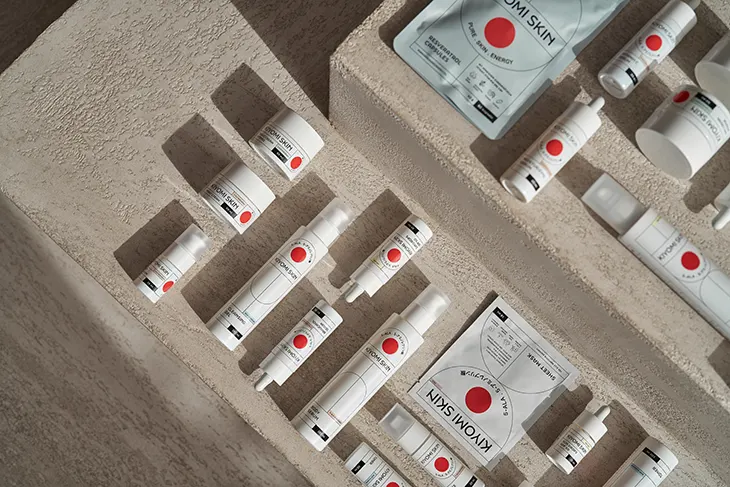
There’s a strong Japanese influence in the naming and philosophy behind Kiyomi Skin. How deeply does that shape the actual product development, and how is that influence translated into the product experience?
That’s true, and it goes far beyond marketing. It runs all the way down to the ingredient itself. 5-ALA was first developed and studied in Japan. Our group has held the patent for 5-ALA phosphate for over 20 years, and it was our Japanese colleagues who first introduced cosmetic products with this ingredient to the Japanese market. So when we built Kiyomi Skin, we had an extraordinary foundation to build on: decades of research and development, real-world data, and formulation learnings from Japan.
“Kiyomi” means pure beauty in Japanese, and that name was chosen very deliberately. It captures what we stand for: beauty that comes from purity, pure ingredients and „clean“ formulations. In addition, no perfumes, no whitening powders or mineral oils. Nothing that doesn’t actively benefit the skin.
In product development, the Japanese influence also shows up in our attention to texture and sensoriality. A product has to feel right to become part of someone’s daily routine, and Japanese skincare culture has an incredibly refined understanding of that. The experience of using a Kiyomi product like how it absorbs or how it layers is as considered as the science behind it.
J-Beauty has always operated from a different premise: less, but better. The philosophy is to understand what your skin actually needs and give it exactly that, nothing more.
Kiyomi Skin centers on 5-ALA. What made you confident enough to build an entire brand around this ingredient, and what did you see in it that others may have overlooked?
That’s a question I get asked a lot and the honest answer is: it wasn’t just confidence. It was conviction backed by evidence. I came from a pharmaceutical background, working at a company where 5-ALA was already being used in clinical settings. So I had the privilege of seeing what this molecule could do at a very fundamental level, long before we ever thought about putting it in a moisturiser.
What I saw, and what others often missed, was the distinction between the pharmaceutical form and cosmetic form. The two are genuinely different molecules with different properties and completely different intended uses. 5-ALA phosphate, the form we use, is a cosmetic ingredient that works in harmony with the skin’s natural processes when used at the low concentrations and formulation approach we’ve developed. It’s a gentle, daily-use ingredient, not a clinical one.
It also takes real courage and significant resources to bring a new brand and a new ingredient to market. Educational investment is essential. Others may have been deterred by regulatory risk too, given the proximity to the drug space but we navigated that carefully. Here is what really crystallised it for me: the visible signs of skin ageing, dullness, uneven tone, loss of firmness, often begin appearing in the late twenties. By the time most people start a serious skincare routine, those early signs are already there. 5-ALA addresses the skin’s appearance at that stage in a way very few other cosmetic ingredients do. When I understood that, I didn’t see a niche ingredient. I saw an entirely new category waiting to be built, starting with cosmetics and extending into dietary supplements.
The brand speaks about “skin energy” and regeneration at a cellular level. How would you explain that in simple, real terms to someone new to the concept?
Think of your skin like a garden. When a garden is well-nourished and has everything it needs, it looks vibrant, full, and alive. When it’s depleted, things start to look dull, patchy, and tired. That’s not a surface problem you can fix just by adding water. The health of the garden depends on what’s happening beneath.
5-ALA is a naturally occurring compound found in the body. As we get older, our skin’s ability to produce it naturally begins to decline, and that shows up in the skin’s appearance over time. Less radiance, slower recovery from stress and fatigue, a loss of that naturally plump and fresh quality that younger skin tends to have.
What makes 5-ALA interesting as a cosmetic ingredient is that it supports the skin from within in a way that looks different to surface hydration. One of the most fascinating effects we observe is what we call metabolic moisture, a form of internal hydration that contributes to skin looking genuinely plumper and more luminous, not just temporarily coated. The skin simply looks more like itself at its best.
When we talk about skin energy, we’re not talking about a marketing concept. It’s an observable difference in the skin’s overall vitality and appearance.
The term anti-aging has always bothered me slightly. We all age. That’s not a battle you win.
Kiyomi Skin focuses on supporting the skin’s function from within rather than treating it on the surface. How does that approach change the way the skin produces moisture and collagen over time?
It changes the timeline, and it changes the durability of results. Most skincare actives work at the surface or just below it. They deliver a signal, provide a substrate, or protect against damage. That’s valuable, but it assumes the cell already has the energy to respond. When cellular energy is low, even excellent actives can underperform. They deliver visible benefits, which is genuinely valuable, but those benefits often depend on consistent, ongoing application to maintain the effect.
When you support the skin at a deeper level, you’re changing what the skin is visibly capable of over time. The results we see in our users tend to build progressively, which is something we fully embrace.
The results tend to build over time, which is something we fully embrace. After 28 days of using our 5-ALA and Vitamin C Serum, we observed an average improvement in the appearance of skin density by 45% in our product testing. Our Moisturising Serum reduced wrinkles by nearly 20% in the same period. These aren’t overnight results, but they’re also not surface-level effects. The improvements are lasting rather than temporary.
For someone trying Kiyomi Skin for the first time, what should they realistically expect to notice, and what is the first visible change that signals the product is working?
I always tell people: the first thing you’ll probably notice is how your skin feels the morning after. There’s a kind of freshness and softness, not because you’ve layered on a film of something, but because the skin has actually had a productive night. It’s a subtle difference at first, but it’s real, and most people recognise it quickly.
In terms of visible changes, radiance tends to come first. Skin that’s generating cellular energy efficiently just looks more alive. Within the first two to three weeks, most users start to notice an improved tone and a kind of natural luminosity that doesn’t come and go depending on whether they’ve slept well. After four weeks, texture and firmness become more apparent.
What I caution people against is expecting a dramatic overnight transformation. That’s not what we’re doing, and honestly, if a product produces that, I’d be asking what it’s actually doing to the skin. What we’re after is the kind of improvement that your friends notice before you do. When someone says “you look well” rather than “you look like you just applied something,” that’s when I know it’s working.
I also recommend starting with a clean, focused routine rather than overloading with multiple actives at once. Let the skin adapt, and you’ll get much clearer feedback on what’s actually happening.
Kiyomi means pure beauty in Japanese, and that name was chosen very deliberately.
What’s the biggest misconception around “clean” skincare that you think is misleading?
There is no official, legally binding definition of “clean.” Not in the US, not globally. Any brand can call their product clean without meeting a single verifiable standard. That’s in my opinion the foundation of the problem.
But the deeper misconception is the equation: “clean” equals safe, and conventional equals toxic. This is simply not true. Many synthetic ingredients that clean beauty brands avoid have decades of safety data behind them and are used at concentrations well below any harmful threshold. Meanwhile, a product can be full of natural botanical extracts and still cause allergic reactions or skin irritation. Nature is not inherently gentle.
The honest answer is that EU-regulated cosmetics come far closer to what most consumers think “clean” actually means than most self-labelled clean beauty products do, precisely because the EU’s restrictions are based on science rather than storytelling. That’s the standard we hold ourselves to, regardless of which market we’re operating in.
Looking ahead, do you see Kiyomi Skin staying centered on 5-ALA, or expanding into a wider range of ingredients and solutions?
5-ALA will always be our foundation. It’s what makes us uniquely Kiyomi. But staying centred on 5-ALA doesn’t mean staying static. There is still so much unexplored territory within the cellular energy space itself.
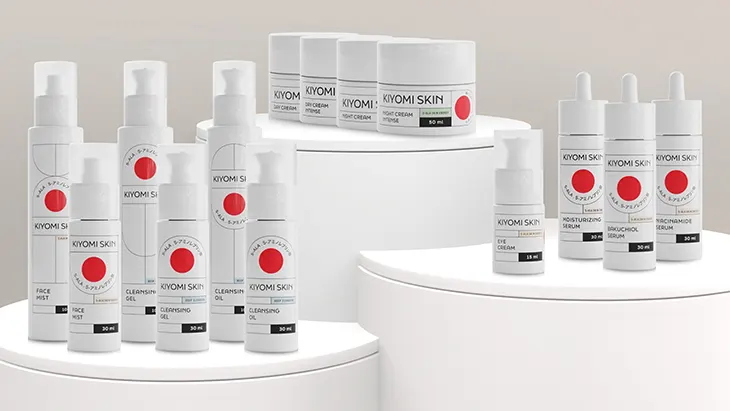
In parallel, we’ve been very thoughtful about the actives we pair with 5-ALA. Bakuchiol is a great example, a genuinely excellent, science-backed alternative to retinol, without the irritation risk. Niacinamide, hyaluronic acid, Vitamin C: these are ingredients we include because the evidence supports them. We’re also watching emerging trends that target the same direction as 5-ALA, such as exosomes. Their small molecular weight means they can carry effects deeper into the skin in a way that’s genuinely compelling.
Beyond skincare, the cellular energy thesis extends naturally further. We’ve already launched Genki Haircare in Germany, and the data on 5-ALA’s effects on hair follicle biology is compelling. Supplements are also on the horizon. The broader ambition within SBI Cosmetics and Health is to build a complete ecosystem around cellular energy: skincare, haircare, and eventually wellbeing products. 5-ALA is the thread that runs through all of it.

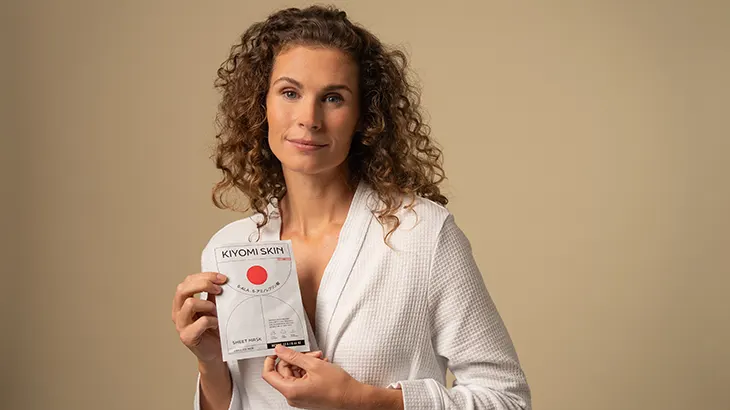
In five years, when people talk about the “J-Beauty Revolution,” what role do you want Daniel Struve and Kiyomi Skin to have played in that story?
Being mentioned alongside the great Japanese players in the market, or recognised as the pioneers who brought 5-ALA to a wider audience, would mean a great deal to me.
The term “anti-aging” has always bothered me slightly. We all age. That’s not a battle you win. But well-aging, supporting the skin’s capacity to function optimally as it changes, that’s something I genuinely believe in. I hope Kiyomi Skin will have been part of shifting that conversation from fighting aging to respecting it.
I’d also like for us to have proven something about ingredient transparency and science-first formulation. That you can build a brand on the toughest regulatory standards in the world, explain complex science in a way that’s truly accessible, and still create products that people genuinely love using. Those things aren’t in conflict. In fact, I think they reinforce each other.
