

Fendi introduces a family of fragrances that traces the Maison’s history through scent, memory, and place. The collection reflects a narrative rooted in Rome and in the Fendi family itself. Each fragrance interprets the house’s values and heritage while presenting a contemporary vision of perfumery that is personal, expressive, and deeply connected to its origins.
FRAGRANCES
The story begins in 1925, when Adele Casagrande Fendi and Edoardo Fendi opened a fur and leather workshop in Rome. Over decades the house grew through the influence of generations of women within the family. Their creative energy shaped the identity of Fendi and established a culture that values craftsmanship, intuition, and individuality. The fragrance collection continues this lineage. Each scent represents a personality, a place, or a moment connected to the house, forming an olfactory portrait of the family and its environment.

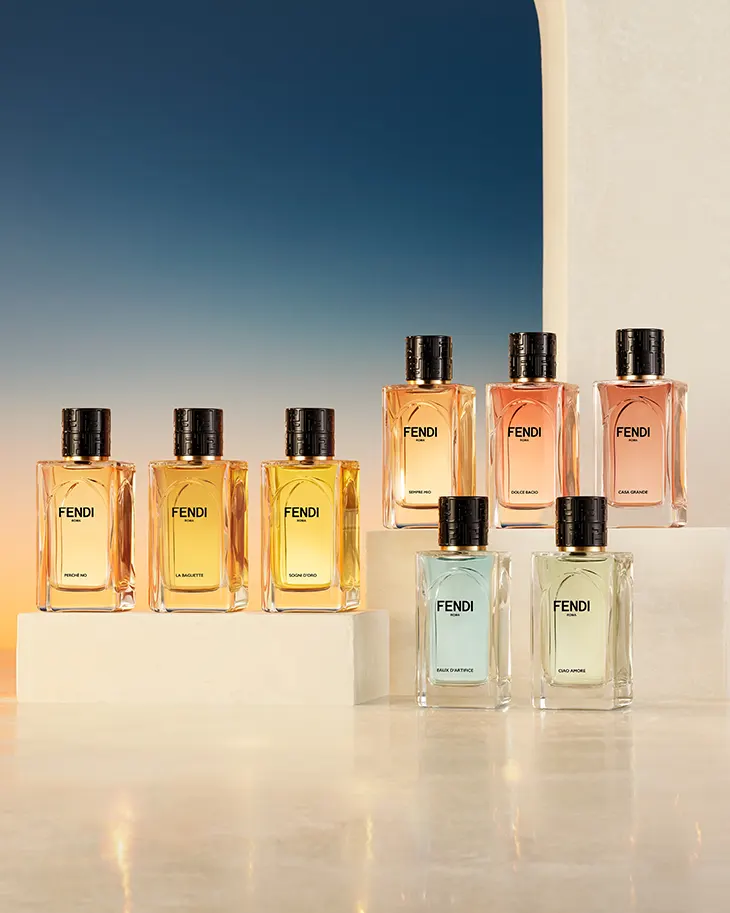
Rome stands at the center of this vision. The city engages every sense, and scent plays a powerful role in its atmosphere. Warm stone and marble release mineral notes under the sun, while umbrella pines add resinous freshness to the air. Gardens filled with laurel, roses, and lantana introduce green and floral accents, and the distinctive smell of leather drifts from the workshops of Roman artisans. These layers form the sensory landscape that shaped the Fendi identity. The fragrance collection interprets this environment and translates the Maison’s Roman character through perfume.
The collection appears exclusively in Fendi boutiques and on fendi.com, where the fragrances present the brand’s craftsmanship through the language of scent. Each composition links emotion, family, and place through carefully selected ingredients.
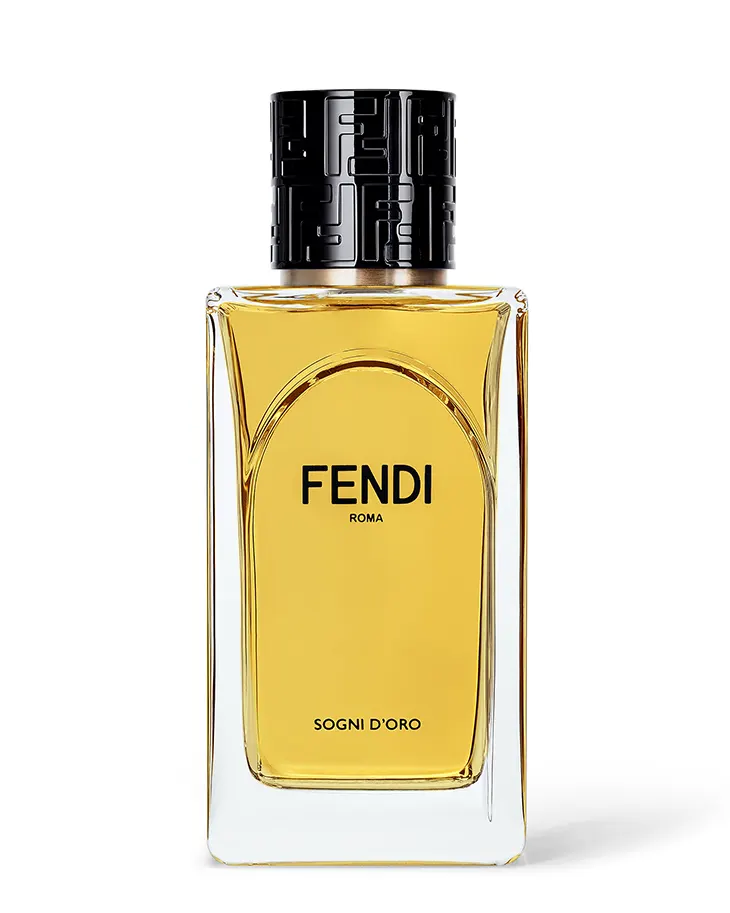
Sogni d’Oro, created by perfumer Quentin Bisch and released in March 2026, captures the moment when Rome turns golden at sunset. As sunlight washes across the city’s stone surfaces, the atmosphere shifts into a warm spectrum of yellow tones. This color carries strong meaning for the house, since shades of ochre, saffron, and straw have long appeared across Fendi’s visual language. The fragrance translates that chromatic identity through scent. A leather accord forms the central structure and conveys warmth and intensity. Soft iris from France introduces elegance, while Italian bergamot adds brightness and movement to the composition.
Earlier releases in the collection explore personal memories from the Fendi family. Perché No, also composed by Quentin Bisch, reflects the spirit of Silvia Venturini Fendi. The fragrance embraces simplicity and spontaneity, expressed through mineral freshness reminiscent of Rome’s stone surfaces. Its atmosphere recalls the countryside home I Casali del Pino, where the family gathers on weekends. Pink pepper from Brazil introduces subtle spice, incense adds smoky depth, and sandalwood frames the composition with balsamic warmth.
La Baguette, composed by Anne Flipo, draws inspiration from family rituals and shared moments. The fragrance references the famous Fendi bag and the generational connections surrounding it. A powdery iris note brings softness and refinement, Madagascar vanilla introduces sweetness, and a velvety leather accord anchors the composition. Together these elements create a scent that reflects intimacy, memory, and continuity.
Through this collection, Fendi constructs a sensory narrative that connects family, city, and heritage. Each fragrance becomes a chapter in a broader story that continues to evolve with every new interpretation of the house’s Roman identity.
