
Sharon Tabb returns as makeup department head for the second season of The Lowdown, the Tulsa-set series starring Ethan Hawke, Kyle MacLachlan, and Peter Dinklage, alongside Martha Plimpton, Betty Gilpin, and Tommy Lee Jones. Her ongoing collaboration with creator Sterlin Harjo, which began on Reservation Dogs, has given her considerable creative freedom in developing the characters’ appearances. For Tabb, makeup offers a way to communicate personality, social background, and the habits people develop over time. In an interview with Beauty SCENE, she discusses her approach to character development and the creative decisions that shape the series.
INTERVIEWS
Throughout the season, Tabb works across a wide range of techniques, from Martha Plimpton’s carefully maintained glamour to Betty Gilpin’s understated everyday makeup and Tommy Lee Jones’ distinctive facial hair. The production also calls for detailed prosthetics, custom tattoos, and frequent adjustments to withstand Oklahoma’s heat and humidity. Each character brings a different set of creative and technical demands, requiring close collaboration with the actors and other departments. Tabb discusses the process behind these transformations, the challenges of maintaining continuity on set, her early interest in special effects, and the artists and films that have influenced her work.
You worked with Sterlin Harjo on Reservation Dogs before The Lowdown. How did that earlier collaboration shape the creative freedom you had on season 2?
I’ve been working with Sterlin since Reservation Dogs, about six years now, and over that time we’ve really developed a great creative flow. I have a pretty good feel for what he likes, his vision, and the world he’s trying to create. We also have many of the same crew members who have worked together over the years, which makes the entire process feel very natural.
I think a lot of that creative freedom comes from the trust we’ve built and the relationships we’ve developed. I love being able to bring my own ideas to the table while also incorporating Sterlin’s thoughts and direction. It’s really about building on the world he’s created, and that’s one of my favorite parts of working with him.
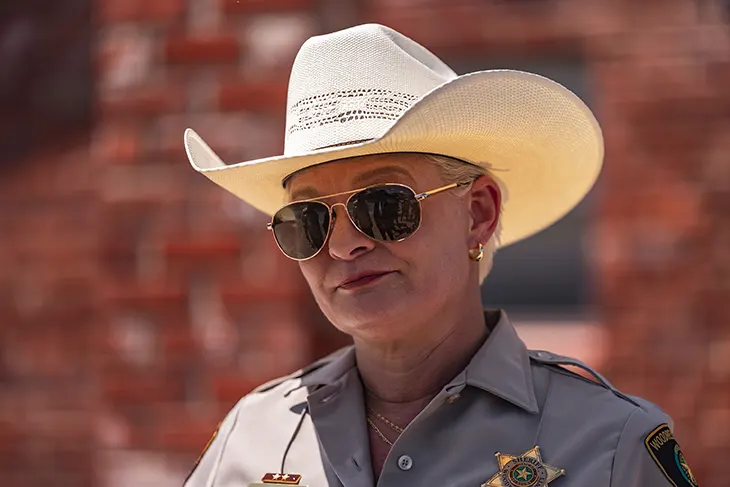
Martha Plimpton’s sheriff has one look she perfected decades ago. How did you build a full glam that still feels like it came from someone without access to the makeup counter or tutorials?
Martha’s character, Sheriff Vela Thorne, is a force! She’s a small-town sheriff with a big personality, and she’s a woman who has worked hard to get where she is.
For me, her makeup tells a story. I imagined her finding her signature look years ago, perfecting it, and sticking with it. We all know women who have worn the same makeup for decades because that’s what they like and what makes them feel confident.
She’s not necessarily fashion-forward, and she’s certainly not concerned about the latest makeup trends. She’s got her look, she knows what works for her, and she’s not changing it for anybody! It’s bold, it’s polished, and in her mind, it’s perfect. I love that about her.
Why did you choose a nude plum lip over red for her? What does that focal point do for the character’s authority and her line of work?
We wanted her to have a full makeup look while still keeping it somewhat realistic for her character. A bright red lip would have pushed her a little too far into traditional glamour and might have been too distracting.
The neutral plum gave her a strong, defined lip without being too in-your-face. It balanced everything else she had going on with her makeup.
To me, her makeup is almost part of her uniform. It’s her armor that she puts on every morning before heading out to run the town. She means business, and that look is part of the image she’s created for herself.
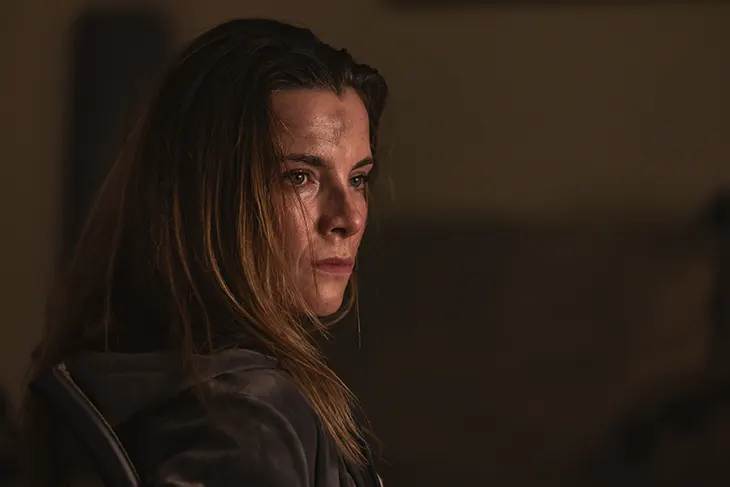
Ginger is meant to look barely made up. How did you keep Betty Gilpin’s skin glowing without it reading as makeup, and why did the team blur the Charlotte Tilbury Pillow Talk liner?
Ginger’s makeup was intentionally very simple and natural. She’s a hardworking, serious attorney, and while she wants to look put together, she’s definitely not a glam girl. She also has a lot going on personally, especially with someone close to her missing in the jail system. The last thing on her mind is spending a lot of time on her makeup.
For Betty’s skin, I really focused on hydration. We kept her skin well moisturized and used Chantecaille rosewater throughout the day to maintain that fresh, slightly dewy glow. I also used MAC Mocha Blush high on her cheeks to give her a soft, natural flush without making her look overly made up.
For her lips, I would sometimes use Charlotte Tilbury’s Pillow Talk lip liner, but instead of leaving a defined line, I would buff it out across the lips and soften the edges. I wanted it to look like her natural lip color, just enhanced a little. Other times, we simply used a tinted lip balm.
The goal was for her to look naturally beautiful without looking like she had spent much time getting ready. Sometimes the simplest looks take just as much thought as the glamorous ones!
The dream sequence gave you a chance to push Ginger into 1960s glam. How did you choose the double lashes, blue shadow, and pinky nude lip, and how did the look signal that we’re inside a dream?
Oh, this was literally a dream to work on! We got to take Ginger, who normally wears very little makeup, and do something completely opposite.
Once we saw the stunning blue gown by our costume designer, Alyssa Blair Cawthon, we knew we wanted to go in that Valley of the Dolls direction. I immediately started thinking about that beautiful, exaggerated 1960s glamour, with a little Twiggy inspiration thrown in.
We went with blue eyeshadow, double lashes, and that soft pinky-nude lip. The double lashes were especially fun because they were such a signature element of that era. The eyes were really the focus, and everything was intentionally more dramatic than anything Ginger would wear in her everyday life.
Kasey Cooper created that gorgeous big, glamorous hair under the direction of our Hair Department Head, Amy Wood, and everything came together beautifully.
I loved the contrast. It was almost like taking Ginger out of her everyday world and putting her into this fabulous 1960s fantasy. The makeup, hair, and wardrobe all worked together to tell the audience that we were somewhere completely different.
Sometimes the simplest looks take just as much thought as the glamorous ones!
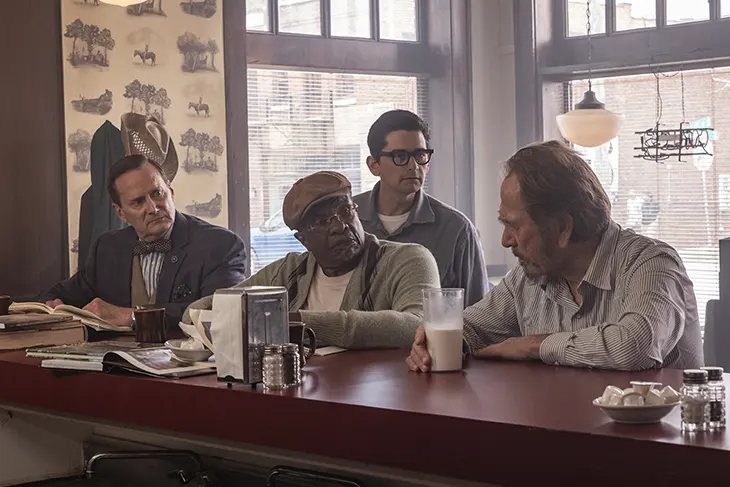
Lee Raybon Sr. started from older movie star references. How did the upward-curled mustache and pointy beard take shape in your conversations with Tommy Lee Jones?
For Lee Raybon Sr., we went with a Van Dyke-style beard and an upward-curled handlebar mustache. We were inspired by that old-fashioned Cavalier look, almost a 17th-century feel.
Some of the references that came to mind were classic Hollywood characters, like Errol Flynn in The Adventures of Robin Hood and Basil Rathbone as Sir Guy of Gisbourne. That dramatic, almost theatrical facial hair was exactly the kind of direction we were exploring.
We wanted something that was a little absurd, but at the same time, somehow made perfect sense for Lee Raybon Sr. It’s such a distinctive look, and that’s what made it fun to create.
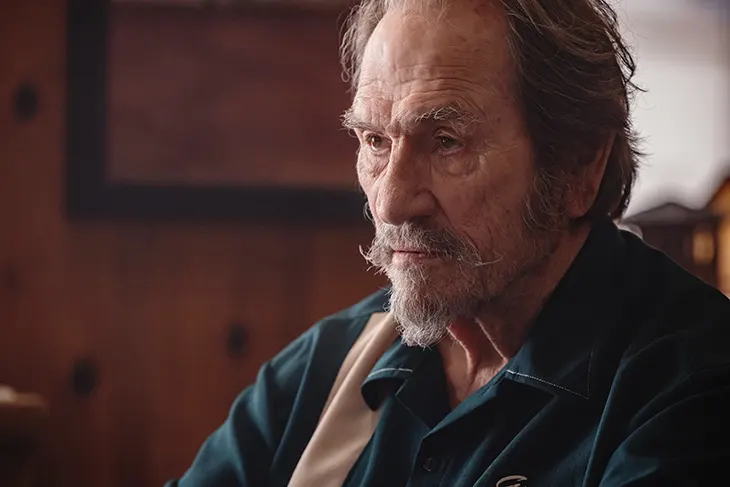
You adjusted the beard’s point with gel and styling product depending on the scene, and used a portable straightener between takes. How did you decide when Lee needed a sharper look, and how did the tools hold up through a full shooting day?
We were constantly maintaining and adjusting his mustache and goatee throughout the show, depending on the scene and how polished we wanted him to appear.
For example, when he shows up as an archaeologist alongside Ray and Marty, we wanted that facial hair to look especially sharp and styled.
We used a combination of strong-hold mustache wax and Got2b Glued spray, along with a small travel flat iron to help achieve that upward flip on the mustache. We were also still training the hair to hold that shape, so it required quite a bit of attention throughout the day.
Those little tools became very important! Sometimes you’re working with just a few hairs, but getting them in exactly the right place can make a huge difference in the overall character.
For McMann’s head, you flattened his hair with the hair team, fit a bald cap, and added redness, discoloration, and regrowth. Which detail mattered most to making the bald cap look like skin, and how did you protect the actor’s comfort throughout?
It definitely takes a village! The funny thing is that Shane McRae, who plays McMann, has the thickest, most beautiful head of hair. Our hair team did an amazing job getting all of that hair flattened so we could apply the bald cap.
I used a thin, narrow bald cap and created an opening in the area where we needed to place the Frankenstein-style wound prosthetic, which was created by Stephen Prouty of Prouty FX.
For me, one of the most important parts was blending the edges. You don’t want to see where the prosthetic ends and the actor’s actual skin begins. But equally important was the coloring. I used multiple shades and tones to create dimension, redness, and natural-looking skin variations. Real skin is never just one flat color, and those little details really help sell the illusion.
As far as Shane’s comfort, we checked on him regularly and made sure he could take breaks, stand up, or walk around when needed. It was a time-consuming application, and he was such a trooper through the entire process.
Although I think he was probably just happy we weren’t shaving off that gorgeous hair of his!
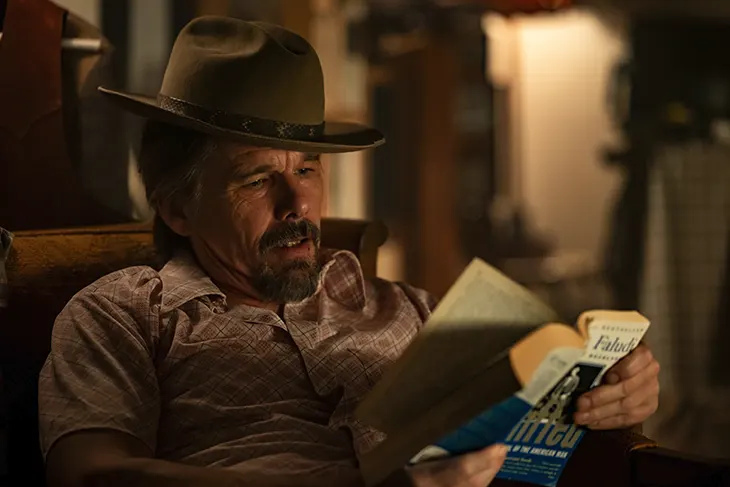
The broken nose and black eye had edges landing in areas that crease and move. What was your method for attaching and blending those prosthetics so they didn’t shift, even in extreme heat?
Those areas can definitely be challenging because you’re working on parts of the face that are constantly moving, whether someone is talking, smiling, or making expressions.
We had multiple prosthetic pieces to work with, and sometimes we needed to use additional blending materials in those areas to help soften the edges and maintain a natural transition into the skin.
Coloring is also a huge part of making everything believable. We would build up layers of color, highlights, discoloration, and texture so the injuries had depth instead of looking like something simply sitting on top of the skin.
And of course, when you’re filming in extreme heat, you have to stay on top of maintenance. You’re constantly watching those edges and making adjustments throughout the day. It’s not always about one perfect application in the morning. It’s about keeping that illusion going through every scene.
The tribal tattoo on McMann began as your hand drawing after you saw the police calendar shoot. Walk us through how you designed it, then scanned and recreated it for later takes.
McMann’s first day on set involved him doing a prison guard calendar shoot with his shirt off, which was absolutely hilarious!
We knew we wanted him to have some tattoos. While we keep a variety of stock tattoos available, we also create custom designs when we want something specific for a character.
We had decided on a Celtic cross and also wanted a tribal-style tattoo on his arm. So I just started drawing one by hand!
Once we had the design and placement the way we liked it, we photographed it and recreated it as a tattoo transfer. That allowed us to apply it consistently for later scenes and maintain continuity.
That’s one of the things I love about this job. Sometimes you’re working from detailed designs and plans, and other times you’re literally drawing something up on the spot and turning it into part of a character. It’s so much fun!
Sometimes you’re working from detailed designs and plans, and other times you’re literally drawing something up on the spot and turning it into part of a character. It’s so much fun!
Heat and humidity were constant on set. Which products and techniques kept the makeup intact, and how did you choose sunscreens that could be reapplied without disturbing what’s underneath?
Every actor and every makeup look is different, so there really isn’t one product or technique that works for everybody.
The biggest thing is being prepared and knowing what each person’s skin and makeup needs throughout the day. We used a variety of products, from setting sprays and blotting sheets to hydrating rosewater sprays, depending on the look we were trying to maintain.
For sun protection, we used quite a bit of Supergoop! Unseen Sunscreen, which worked well underneath makeup, along with COOLA SPF sprays for reapplication throughout the day without having to disturb the makeup too much.
Sometimes it’s just a quick touch-up, and other times you have to partially redo an area because of the heat, sweat, or humidity.
It’s really about staying on top of things, paying attention to the little details, and being prepared for whatever the Oklahoma weather throws at you! LOL.
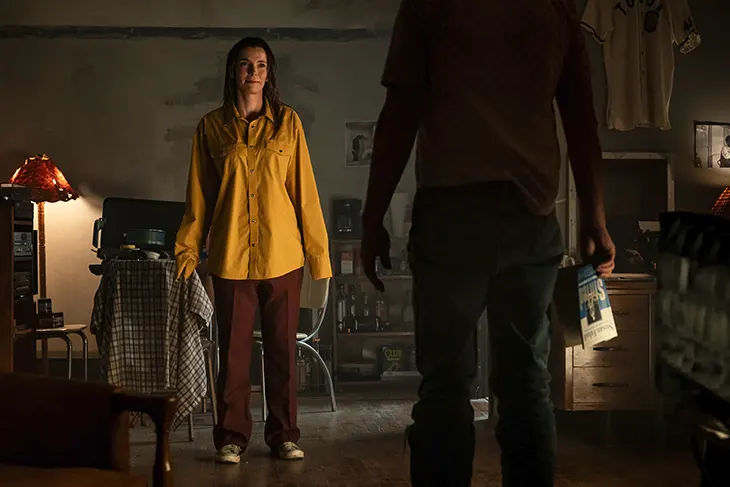
Looking back on season 2, which look are you proudest of, and what did working on this show teach you that you’ll carry into your next project?
You know, I don’t think I could choose just one! I’m genuinely proud of all of it.
What I love most about this season is that we had the opportunity to showcase such a wide range of makeup skills. We went from the simplest, most natural beauty looks to full glamour, character makeup, facial hair, tattoos, injuries, and special effects. As an artist, that’s incredibly rewarding.
I’m also extremely proud of our entire makeup team. Everyone brought their own talents and creativity to the table, and we worked so well together. Our team absolutely killed it!
If there’s one thing I continue to take away from working on The Lowdown, it’s how important collaboration and trust are in this business. You can have all the technical skills in the world, but when you have a creative team that trusts one another and genuinely enjoys building these characters together, that’s when the magic happens.
How did you first get into makeup and prosthetics, and what drew you to this kind of character work over more conventional beauty?
I’ve been an artist for as long as I can remember. I’ve always loved creating things, and makeup became another way for me to express that creativity.
I was drawn to character makeup and prosthetics pretty early in my career, but the funny thing is, I didn’t actually know how to do a lot of it! I couldn’t afford to attend a professional makeup school, so I had to figure things out on my own. There was a lot of learning, practicing, experimenting, and probably quite a few mistakes along the way!
It’s been a long journey, and I’m still learning. I think that’s one of the beautiful things about this industry. There’s always another technique to discover or another skill to develop.
I still love traditional beauty makeup, but character work allows me to take that creativity in so many different directions. I can make someone look naturally beautiful one day and completely transform them into another person the next.
And I really love the collaborative side of it. Building a character with the actor, director, and other departments is such a fun process. You’re not just applying makeup. You’re helping tell a story.
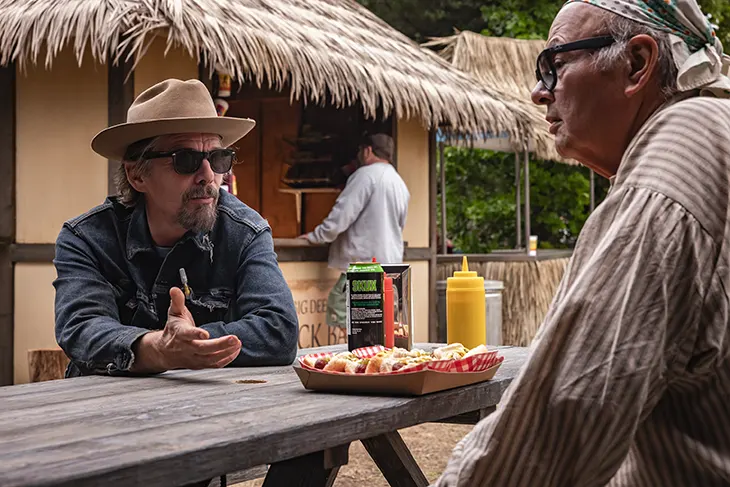
What do you wish more people understood about the work of a makeup department head, especially the planning and problem-solving that happens before the camera rolls?
I think a lot of people would be surprised by how much work happens before we ever pick up a makeup brush!
There’s so much research, planning, and preparation involved. We’re breaking down scripts, developing character looks, researching time periods, selecting products, testing techniques, coordinating with other departments, and making sure everything is ready before filming begins.
As a department head, you’re also managing your team, budgets, supplies, schedules, and continuity. And of course, you’re constantly problem-solving because things can change at any moment on a film set.
We also invest an incredible amount of our own time and money into products, tools, and continuing education. This industry is always evolving, and you have to keep learning.
And let’s not forget, the makeup and hair departments are usually some of the first people arriving on set in the morning! LOL.
There’s definitely a lot more happening behind the scenes than people realize, but that’s also part of what makes this job so interesting.
You’re not just applying makeup. You’re helping tell a story.
Which artists, films, or eras have most shaped your approach to makeup, and how do you see those influences showing up in your work today?
Oh gosh, there are so many incredible artists who have inspired me over the years! Ve Neill, Dick Smith, Matthew Mungle, Roshar (current amazing fashion beauty mua) and the entire Westmore family are just a few of the legends who have made such an impact on our industry.
I’m also a bit of a sci-fi nerd! I’ve always loved the incredible character makeup in Star Wars and Star Trek, and films like Mrs. Doubtfire really fascinated me because of how completely an actor could be transformed through makeup.
And then on the other end of the spectrum, I absolutely love old Hollywood glamour. Those beautiful, timeless looks, the attention to detail, and the artistry behind them have always inspired me.
I think all of those influences show up in my work today because I’ve never wanted to be limited to just one type of makeup. I love beauty, I love glamour, I love special effects, and I love creating characters.
The artists I admire taught me that makeup can do so much more than make someone look beautiful. It can completely change how we see a person and help bring a character to life.
Whether I’m creating a subtle, natural look or something completely over the top, I’m always thinking about the story we’re telling and the little details that make that character believable.
And after all these years, I still get excited about creating something new. I think that’s what keeps me loving this work.
