
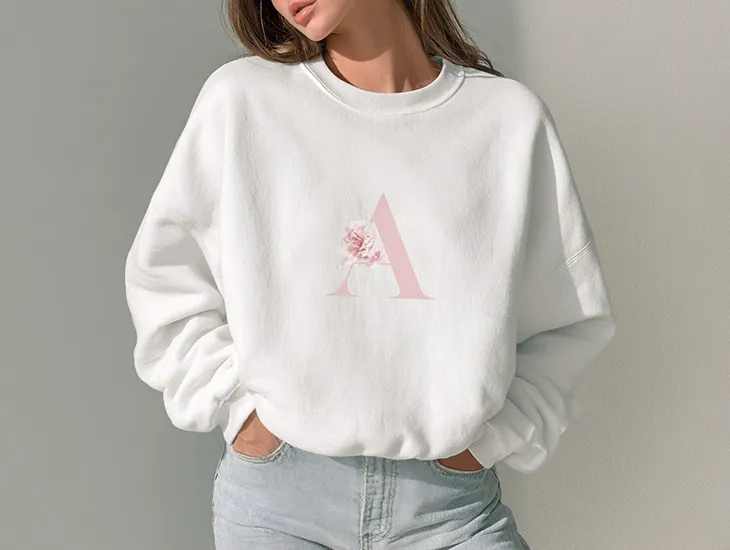
Ordering custom sweatshirts sounds straightforward until you’re staring at a catalog with a dozen fabric weights, three decoration methods, and a group of people with wildly different preferences. Getting the right combination of style, weight, and print method makes the difference between sweatshirts people wear constantly and ones that collect dust in a closet.
Why Sweatshirts Work So Well for Custom Apparel
Sweatshirts occupy a unique space in custom apparel. They’re warm enough to be practical, casual enough to feel comfortable, and structured enough to carry a logo without looking sloppy. They travel from the gym to the office to a Saturday afternoon without anyone thinking twice.
According to PPAI’s 2024 Distributor Sales Volume Estimate, apparel was the most commonly sold promotional product category, making up 26.6% of total industry sales, ahead of every other product type including drinkware and bags. Sweatshirts sit at the center of that demand because they offer something most branded items don’t: daily, visible wear across multiple seasons.
They also scale well. Whether the order is 12 pieces for a small club or 500 for a corporate event, the per-unit cost stays reasonable, and the finished product looks intentional rather than generic.
Choose the Right Sweatshirt Style
The style sets the tone before anyone reads the logo. Matching the right silhouette to the group wearing it matters more than most people expect.
Hoodies
Pullover hoodies are the most popular option for a reason. They read as casual and approachable, which makes them a natural fit for youth sports teams, college organizations, and lifestyle brands. The hood adds a layer of functionality that people actually use, and the kangaroo pocket gives wearers somewhere to put their hands. For groups that want something relaxed and wearable across a wide age range, a pullover hoodie is rarely the wrong call.
Crewnecks
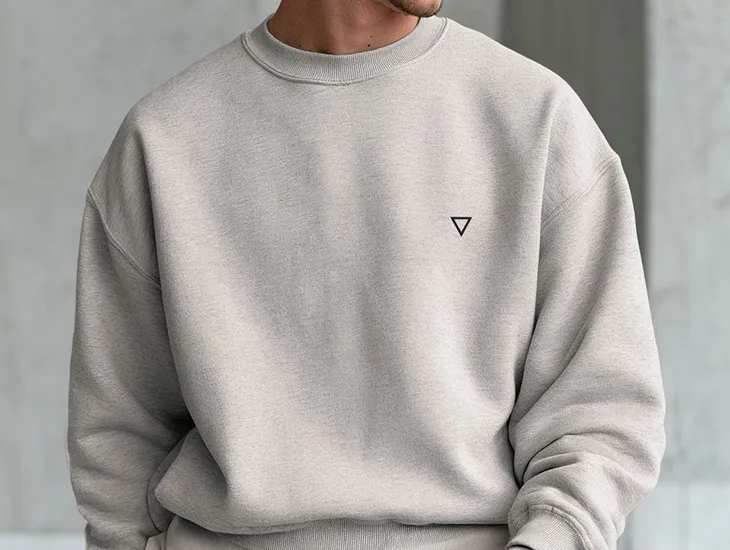
Crewnecks carry a slightly more polished look than hoodies while staying firmly in the casual category. The clean neckline gives logos and graphics more room to breathe, and the lack of a hood makes them easier to layer under a jacket. Schools, nonprofits, and businesses that want branded apparel people will wear beyond a single event often gravitate toward crewnecks for exactly that reason.
Full-Zip and Quarter-Zip Styles
Full-zip sweatshirts function more like a light jacket, making them practical for outdoor events, coaching staff, or anyone who needs to regulate temperature throughout the day. Quarter-zips lean slightly more upscale and work well for corporate settings where a branded pullover needs to feel polished. Both styles offer a chest or left-sleeve placement for embroidery that looks clean and professional.
How Sweatshirt Weight Changes Comfort and Durability
Fabric weight is measured in ounces per square yard, and it has a direct effect on how a sweatshirt feels, wears, and holds up over time. Lighter fleece in the 7 to 8 oz range feels softer and drapes more easily, making it comfortable for everyday wear. Midweight options around 9 to 10 oz add structure without feeling stiff, a good middle ground for most group orders. Heavyweight fleece at 12 oz and above is built for cold climates and hard use, holding its shape wash after wash.
Blended fabrics, typically a cotton-polyester mix, balance softness with durability. Pure cotton feels natural and breathes well, while higher polyester content resists shrinking and holds color longer. For groups ordering sweatshirts that need to survive multiple seasons, a 50/50 or 60/40 cotton-poly blend is a reliable choice.
Screen Printing vs. Embroidery vs. Digital Printing
The decoration method shapes how the finished sweatshirt looks and how long it holds up. Each approach has a clear use case.
Screen printing layers ink onto fabric and suits large, colorful, flat designs at higher quantities, while embroidery stitches thread directly into the fabric and suits logos on structured items like polos, hats, and jackets. On sweatshirts specifically, screen printing handles bold graphics across the chest or back with vivid results. Embroidery on a left-chest logo reads as more corporate and premium, and it holds up exceptionally well over time.
Digital printing, including direct-to-film (DTF) transfer, has become a strong option for smaller orders with complex, full-color artwork. It requires no setup screens, which lowers the cost for short runs, and it handles photographic detail and gradients that screen printing can’t replicate cleanly. The tradeoff is durability: digital prints may not match the longevity of embroidery or high-quality screen printing on heavy fleece.
For most team and event orders, screen printing on the chest or back delivers the best combination of visual impact and cost efficiency. For corporate or professional settings, embroidery on the left chest signals quality. Simple as that.
How to Choose Sweatshirts for Different Groups
The right sweatshirt for a youth soccer team looks nothing like the right one for a law firm holiday gift. Thinking through the end user first saves time and avoids costly reorders.
Teams and clubs benefit from durable midweight sweatshirts with bold screen-printed graphics. Numbers, names, and mascots all translate well to screen printing, and the casual style fits the athletic context. Pullover hoodies dominate here.
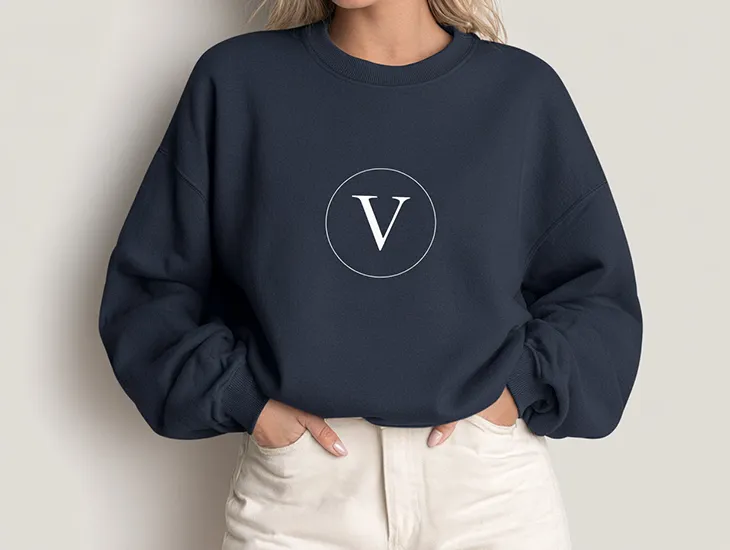
Businesses ordering branded sweatshirts for employees or clients usually want something that looks deliberate. A crewneck or quarter-zip with an embroidered logo in a brand color reads as professional without being stiff. Fabric quality matters most in this category, since the sweatshirt becomes a reflection of the brand.
Schools need sweatshirts that hold up to regular wear, survive repeated washing, and appeal to a wide age range. Heavyweight or midweight cotton-poly blends in school colors with screen-printed graphics are the standard for a reason. Crewnecks and hoodies both work depending on the grade level and intended use.
Events and fundraisers call for a different calculation. The sweatshirt is often the event itself, a keepsake people want to hold onto. Choosing a style and color that feels less generic and adding a specific date or design element gives the piece a longer life beyond the event day.
When ordering personalized sweatshirts for any of these groups, confirming size distribution early is one of the most overlooked steps. Most groups skew toward medium and large but consistently underestimate how many XL and 2XL sizes they need.
Common Mistakes to Avoid When Ordering Custom Sweatshirts
A few predictable errors show up in almost every large order. All of them are avoidable.
- Ordering too few sizes at the extremes. Sizes XS and 2XL always run short. Build a buffer into both ends of the size run.
- Choosing the wrong fabric for the decoration method. Heavy fleece with a thick pile can cause screen-printed ink to crack sooner. Confirm the fabric and print method are compatible before finalizing.
- Using a logo file that is too low resolution. A logo that looks sharp on a screen at small sizes often falls apart when scaled to a full back print. Request a vector file from the designer before submitting artwork.
- Skipping a physical sample. For large orders, requesting a pre-production sample catches color and placement issues before they multiply across hundreds of units.
- Ignoring care instructions. Sweatshirts dried on high heat repeatedly will shrink and fade faster. Including care information with the order, especially for event or team sweatshirts, extends the life of the product.
How to Create a Sweatshirt Design People Will Actually Wear
The best custom sweatshirts don’t look like walking advertisements. They look like something the wearer chose. That distinction comes down to design decisions made before the order is placed.
According to ASI research, outerwear generates more impressions than any other promotional item, with up to 7,856 impressions per item over its lifetime. But that number only holds if people wear the piece, which means the design has to earn its place.
Keep the color palette tight. One or two colors almost always outperform a five-color design on a sweatshirt because the result feels intentional rather than cluttered. Pick a garment color that works with the logo rather than competing with it. Dark sweatshirts with a single light-colored graphic tend to age well and feel less dated than busy multicolor prints.
Placement matters as much as the design itself. A left-chest logo paired with a back graphic gives the sweatshirt two distinct moments without overwhelming either side. Sleeve placement works well for secondary text like a year, a location, or a tagline.
Where to Start
Lock in the end user and the occasion first, then work backward through style, weight, and decoration method. A well-chosen sweatshirt becomes something people reach for on a cold morning without thinking about it, which is exactly where a brand or team name should be.
