
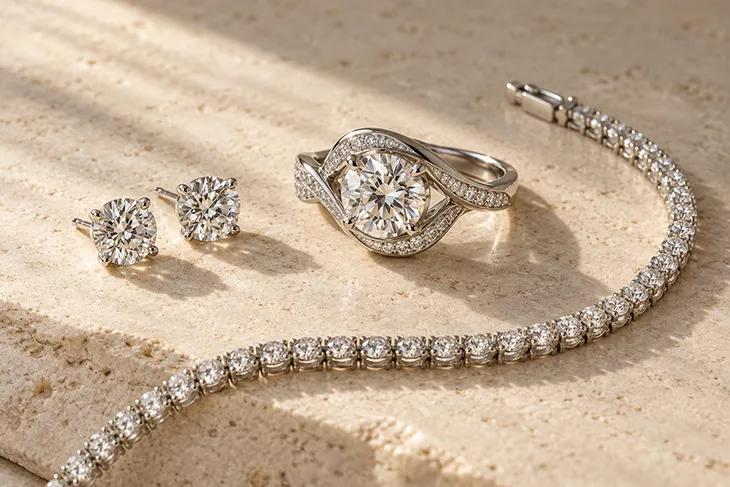
Fine jewelry has always reflected its era. Design preferences evolve, technology advances and shoppers reconsider what makes an object worthy of a luxury price tag. Lab-grown diamonds have become part of that evolution, moving beyond their early reputation as an alternative choice and into jewelry collections built around serious sparkle, ambitious design and personal style.
Lab-grown diamonds have essentially the same chemical, physical and optical properties as mined diamonds. That distinction matters in a market where shoppers increasingly understand that the source of a stone does not determine whether it can deliver the brilliance associated with diamond jewelry. The result is a broader definition of luxury, one driven as much by beauty and choice as by tradition.
Diamonds Become More Wearable
Diamond jewelry was once heavily associated with engagements, anniversaries and major milestones. Those occasions still matter, but lab-grown diamonds are helping expand the category into pieces designed to be worn far more often.
Consider lab-grown diamond earrings, which can bring the unmistakable brightness of diamonds into an everyday jewelry collection without reserving them for formal events. Classic studs can work with a white T-shirt and jeans just as naturally as they do with eveningwear. Diamond hoops, drops and more sculptural designs push the idea further, treating diamonds as part of a personal wardrobe rather than jewelry that spends most of its life inside a box.
That shift reflects a broader change in luxury fashion. People increasingly want beautiful purchases they can actually enjoy. Jewelry can still feel special without being saved for a special occasion.
Size Is Part of Design
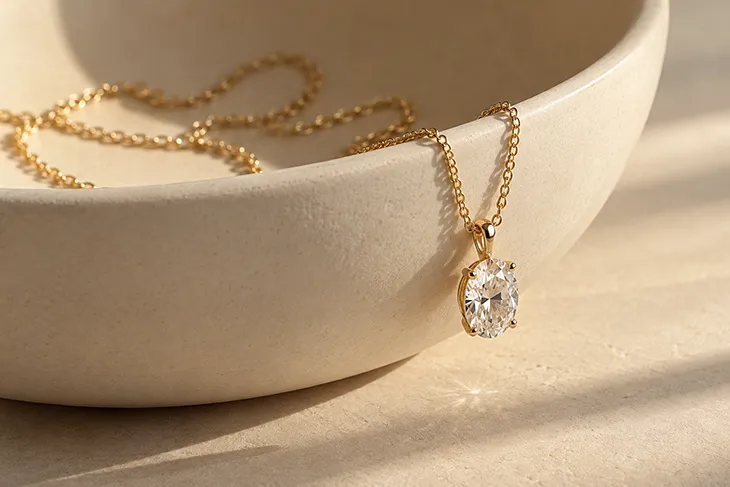
One of the most visible effects of lab-grown diamonds is the freedom they can give shoppers when considering carat weight. Lab-grown stones generally cost less than mined diamonds with comparable characteristics, although prices vary according to cut, color, clarity, size and the seller.
That difference can change the design conversation. Someone working within a particular budget may be able to consider a larger center stone, a more elaborate setting or additional diamonds rather than scaling back the original idea.
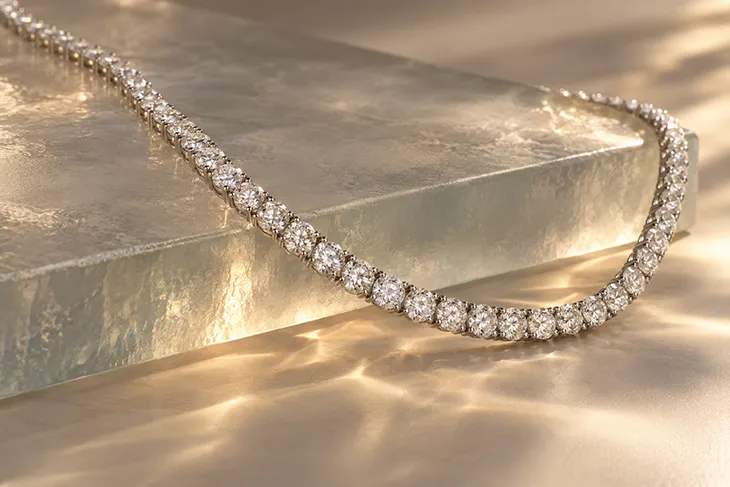
For designers, that opens interesting possibilities. Tennis necklaces can become more dramatic. Cocktail rings can embrace generous proportions. Earrings can feature larger stones that make their presence known without relying on an elaborate setting.
Bigger is not automatically better, of course. A beautifully proportioned smaller diamond can be far more appealing than a larger stone with an uninspired cut. The point is choice. Lab-grown diamonds can give shoppers greater flexibility to decide where they want their jewelry budget to make an impact.
Gifting Gets More Interesting
Diamond jewelry has long served as a marker of romantic commitment, but its meaning does not have to begin and end there. Lab-grown jewelry fits easily into a broader approach to gifting that includes birthdays, graduations, career milestones, holidays and personal achievements.
That makes diamond gifts far more versatile than the traditional engagement ring or anniversary band. A delicate pendant can commemorate a graduation. Diamond hoops can celebrate a promotion. A bracelet might mark a significant birthday, while a ring chosen for oneself needs no occasion at all.
The design possibilities also make it easier to match jewelry to the person receiving it. Minimalists might prefer a bezel-set pendant or understated studs. Someone with a more maximalist approach to fashion might gravitate toward an oversized cocktail ring, layered tennis bracelets or statement earrings.
Luxury becomes more personal when the jewelry reflects the recipient rather than following a predetermined formula.
Design Is Moving Forward
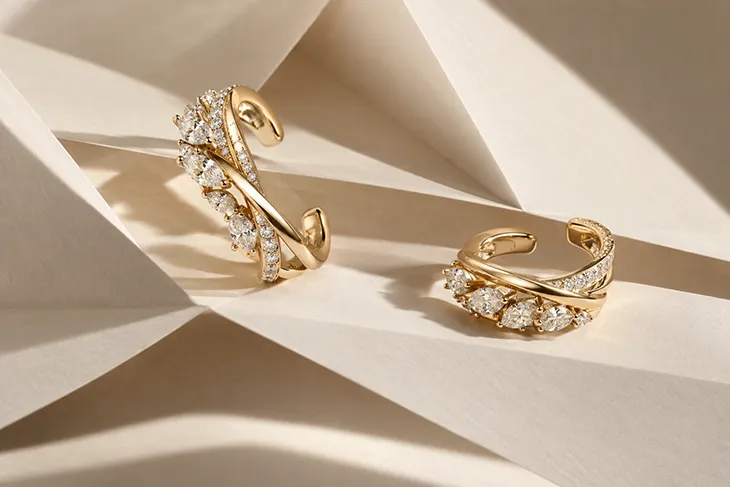
Lab-grown diamonds are arriving at the same time that fine jewelry itself is becoming more playful. Traditional round and princess cuts remain popular, but pear, oval, emerald, marquise and other shapes offer very different personalities. Designers can combine those stones with yellow gold, white gold, platinum or mixed-metal settings to create pieces that range from restrained to unapologetically bold.
Stacking has also changed how diamond jewelry is worn. Rings no longer have to stand alone, and bracelets can be combined with watches, bangles and other textures. Diamond necklaces can be layered with chains of different lengths rather than treated as the single centerpiece of an outfit.
Luxury Is Becoming Personal
Traditional fine jewelry relied heavily on rarity and heritage to communicate value. Those ideas have not disappeared, but consumers now have more ways to define what luxury means to them.
For some, craftsmanship will remain the deciding factor. Others care most about carat weight, unusual design or the ability to create a custom piece. Some simply want a diamond that looks spectacular when the light catches it.
Lab-grown diamonds give shoppers another way to pursue those priorities. They do not erase the appeal of mined stones, nor do they need to. They expand the choices available in a category that has spent generations following fairly rigid conventions.
The new rules of luxury are ultimately less about rules at all. Fine jewelry can be traditional or experimental, understated or extravagant, sentimental or simply beautiful. Lab-grown diamonds are making room for more of those possibilities, and that may be their most fashionable quality of all.
